Photo by Vince Fedoroff
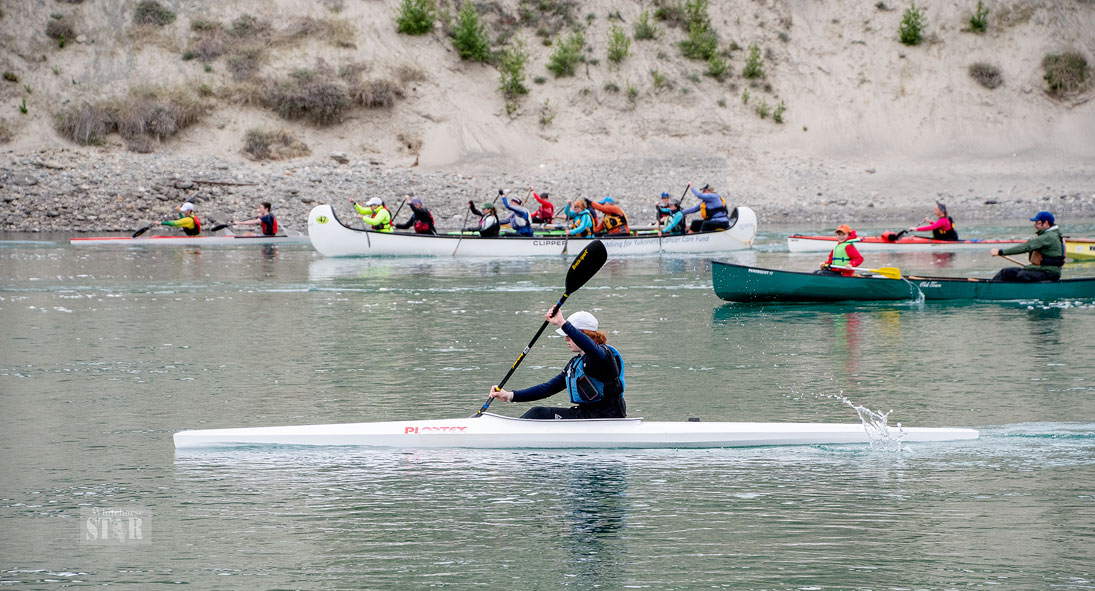
THE START OF JOURNEY – Competitors in the Icebreaker Race begin to paddle at the start at Marsh Lake on Saturday with their eyes set 28 kilometres down the river to the finish at Schwatka Lake.
Photo by Vince Fedoroff
THE START OF JOURNEY – Competitors in the Icebreaker Race begin to paddle at the start at Marsh Lake on Saturday with their eyes set 28 kilometres down the river to the finish at Schwatka Lake.
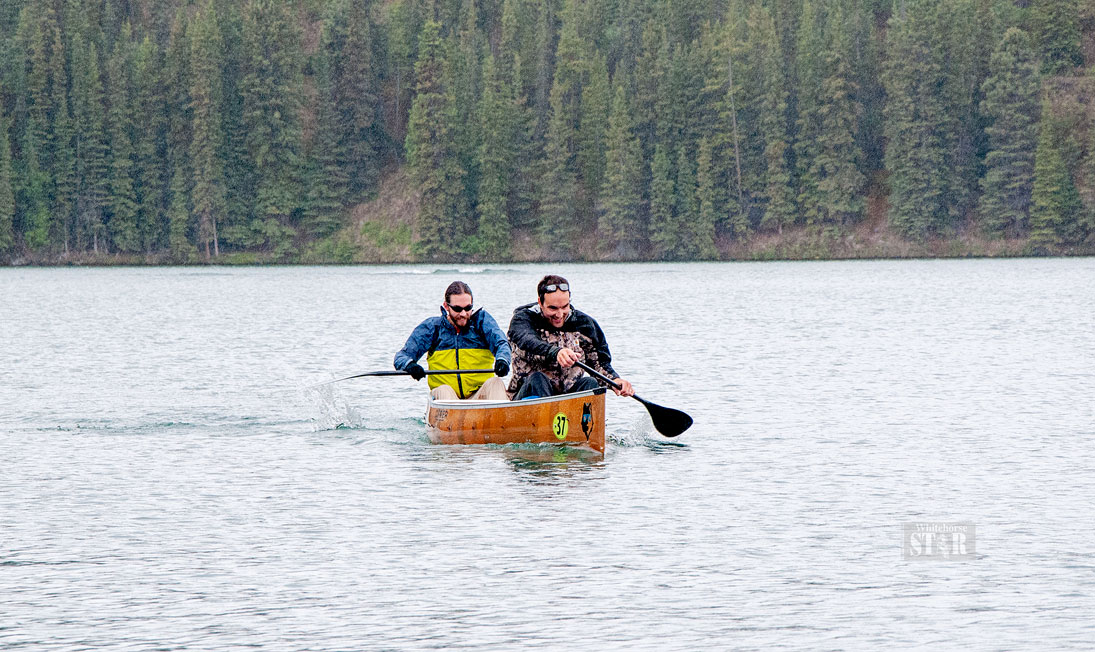
Photo by John Tonin
THE FINAL STROKES – The tandem canoe of Jake Paleczny, stern, and Rob Spinks, bow, are the first boat to reach the Icebreaker Race finish line at Schwatka Lake, in a time of two hours, 30 minutes, on Saturday.
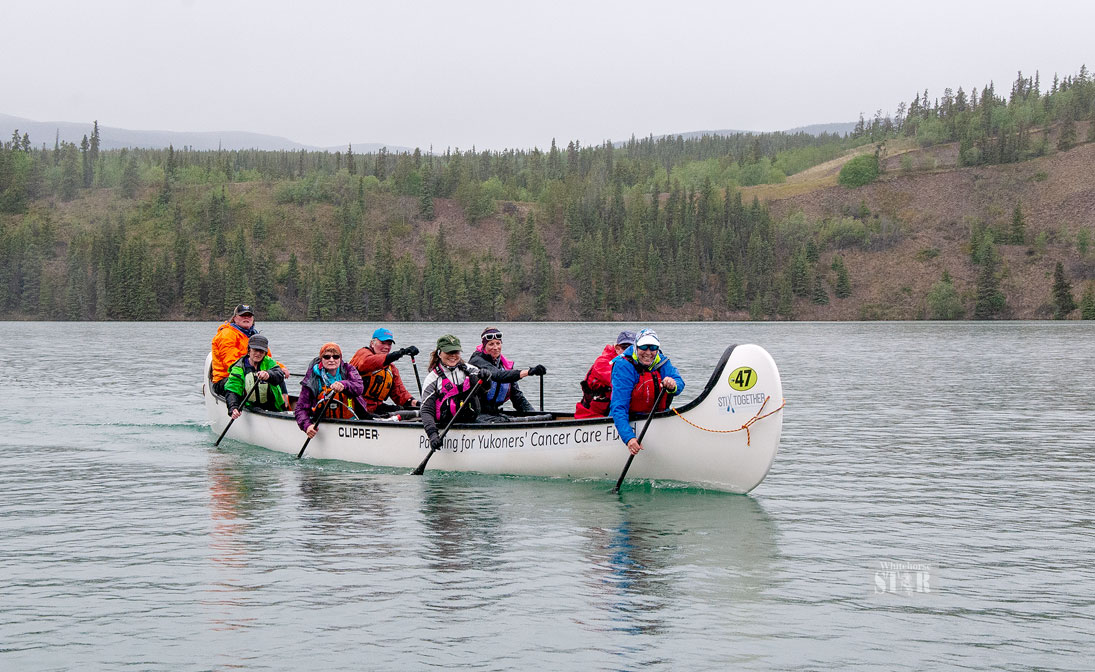
Photo by John Tonin
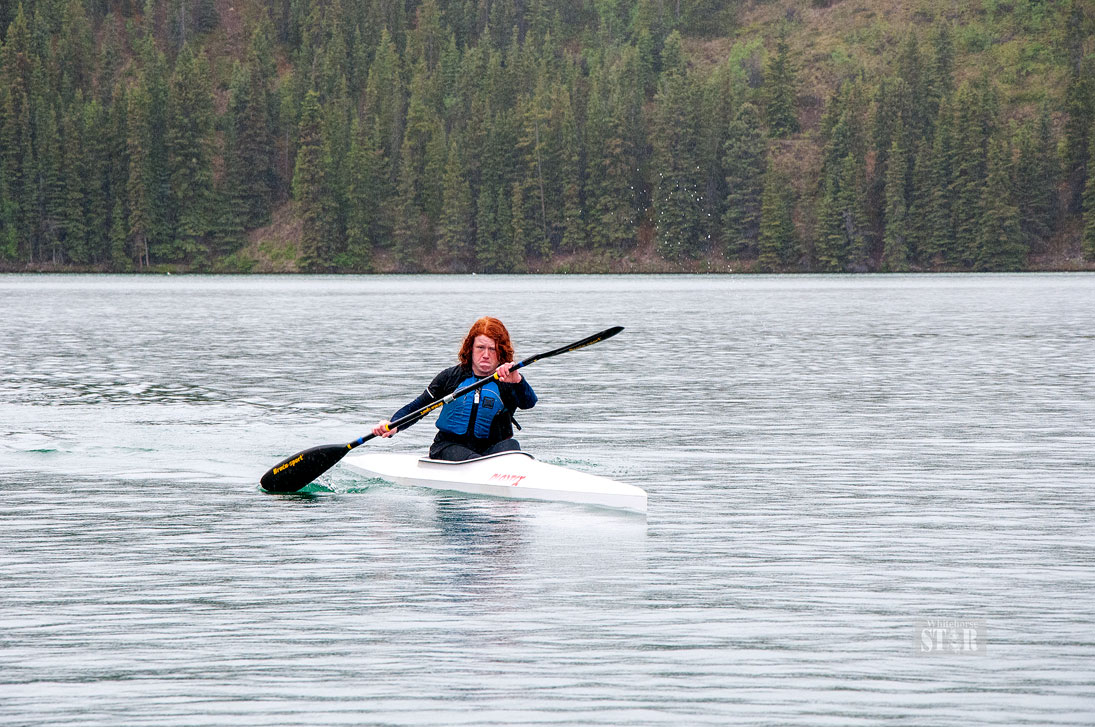
Photo by John Tonin
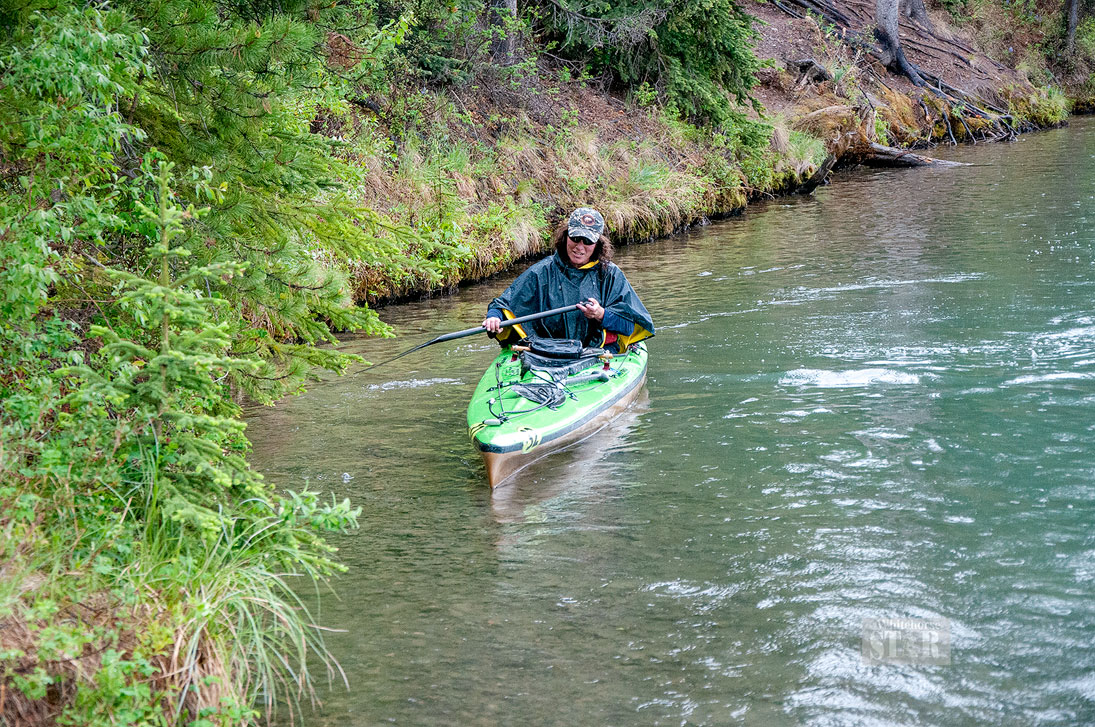
Photo by John Tonin
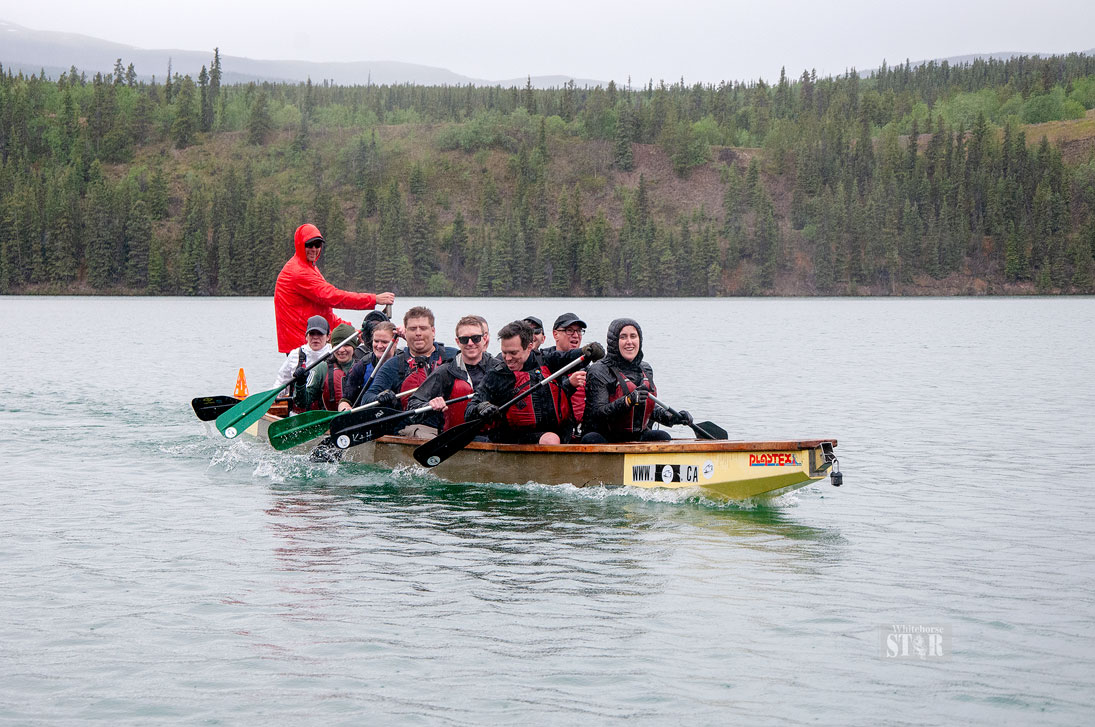
Photo by John Tonin
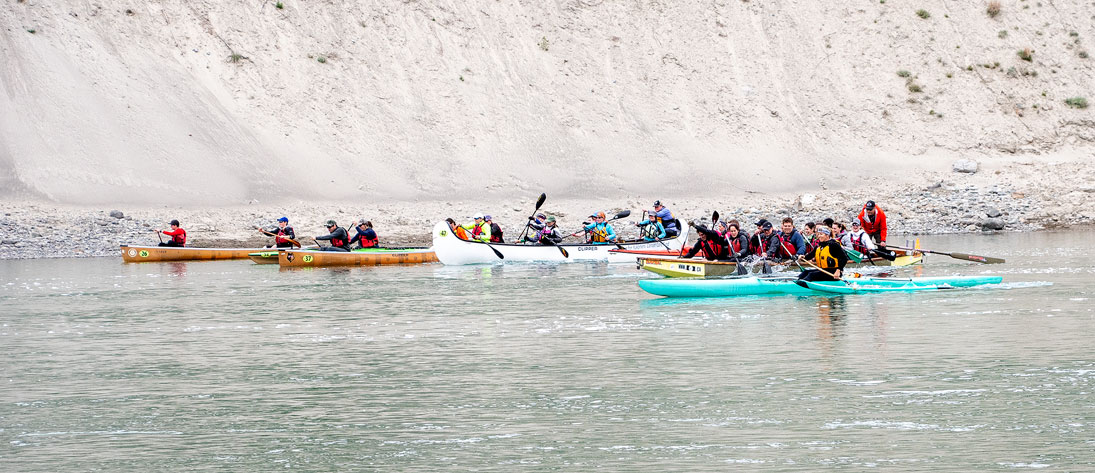
Photo by Vince Fedoroff
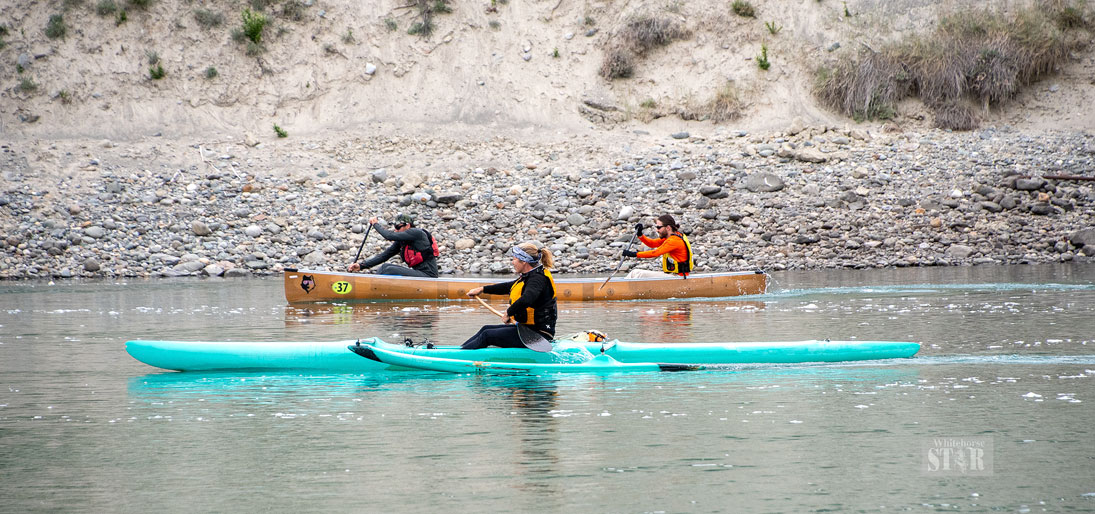
Photo by Vince Fedoroff
It was a chilly, wet and windy Saturday but that didn’t stop the paddlers in the Icebreaker Race hosted by Flatwater North from launching their boats into the river.
It was a chilly, wet and windy Saturday but that didn’t stop the paddlers in the Icebreaker Race hosted by Flatwater North from launching their boats into the river.
The race was 28 kilometres on the Yukon River. All the paddlers met at the Schwatka Lake Day Use area before being shuttled to the Marsh Lake Dam, the start of the race.
All 11 a.m. the competitors left from Marsh Lake and headed back to the finish at the day use area.
The rain continued to pound down on Schwatka Lake as dedicated volunteers prepared a barbecue and family and friends waited for the boats to arrive. Then at the end of the lake, the first boat became visible.
It was the marathon tandem canoe of Jake Paleczny and Rob Spinks who reached the finish line in two hours, 30 minutes.
As the boat reached the end Paleczny’s voice could be heard over the water wondering if they could crack the 2:30:00 mark.
“It feels great,” said Paleczny. “We thought maybe 2:35, 2:40, somewhere in then but it is always hard to tell. It was very windy, a lot of rain and really wavy from 50 minutes in.”
“I can’t remember what our time was last year,” said Spinks. “For the conditions this year it seemed pretty good. The first half was really bad, it was really rough and really windy about halfway it got nice.
“It was the first time in this race, Jake and I do the shorter races around town lots, and this was different to have to put our raincoats on and actually need it this time.”
Although the conditions on the water were rough Paleczny said it didn’t slow Spinks and himself down to badly.
“You lose a little bit of time,” said Paleczny. “I think it is harder in some of the tippier boats to be in the waves. For us to be in a canoe is a little bit easier.”
Paleczny and Spinks have been competing together for a while now. In last year’s River Quest, the duo, in the tandem canoe men’s category came fourth overall and first in their category.
Paleczny said they don’t let the weather conditions get to them.
“We have been paddling together quite a bit over the past couple of years,” said Paleczny.
“We certainly don’t let that sort of stuff get into our heads. That is really important, especially in something like the River Quest.
“You know it can get into other people’s heads so you have to use it as an advantage.”
The Icebreaker Race, Paleczny said, was good training for the upcoming River Quest.
“It’s a good opportunity to get out there and paddle hard with more motivation than we would have on a regular training day.”
“This one is a good training run for us for sure,” said Spinks. “You need to do all the smaller races I think it really helps in the longer races. Just the level of competition and getting used to paddling around other boats is really helpful.”
For the 2019 YQR, Paleczny and Spinks will be teaming up with Mike de Abreu and Tom Phillips, two paddlers from Ontario whom they competed against in previous River Quests.
Alison Eremenko, a solo paddler in a marathon canoe arrived back at Shwatka Lake in three hours, 11 minutes, placing sixth overall She to will be paddling the River Quest later this month.
“It was windy, rainy but fun as always,” said Eremenko. “This was another component in training for the River Quest.
It’s just testing equipment, water conditions, all sorts of things.
“It’s a great way to get out there see where things are at and see your own performance.”
Mirjam Fleming finished just under the three-hour mark in a time of two hours, 59 minutes, making her the fifth boat to finish.
Fleming was competing solo in a kayak and she will be a rookie during this year’s River Quest. She felt her Icebreaker Race time was strong.
“I think it went pretty well actually,” said Fleming. “Despite the headwind, I feel pretty strong. For sure I am happy with my time.”
In training for her first River Quest Fleming said the Icebreaker Race was another good step in her preparations.
“It is important to figure out how to sit in the boat, how to adjust my seat, where to have my water bottle and where to have my close,” said Fleming.
She also felt the Icebreaker Race was a good training race because she got to test herself against other boats in the water even though she was the only female solo kayaker competing on Saturday.
The Icebreaker Race had 11 boats in the water overall in a variety of classes.
The voyageur canoe named Stix Together featuring Susan Hamilton, Kristie DeVries, Monique Levesque, Deb Bartlette, Anna Peacock, Anne Labelle, Cheryl Rivest, and Carolyn Relf was the second boat to reach the finish. Their time was two hours, 51 minutes.
Stix Together will be on the water when the River Quest commences. The team’s goal is to reach the finish in Dawson in less than 50 hours and raise as much money as they can for the Yukon Cancer Care Fund.
Lynwen Birch, the new Flatwater Paddling Yukon coach by way of Australia was the third overall boat to finish. In an outrigger canoe, Birch finished 40 seconds behind Stix Together.
Rogan Parry, one of Flatwater’s junior paddlers was the fourth fastest boat to reach Schwatka. Solo paddling in a sprint kayak, he finished one minute after Birch.
The Icebreaker also featured a boat not often seen, a Dragon Boat, which was paddled by members of the Canadian military who were visiting the Yukon.
One of the race organizers, Helen Anne Girouard, said those in the boat wanted a neat way to see the Yukon and the Dragon Boat was the largest boat Flatwater had that could fit the 13 paddlers.
Those in the Dragon Boat finished the race in 3:17:40 and as they became visible on Schwatka Lake you could hear them chanting as they rowed.
As they got closer they chanted louder, seemingly unbothered by the wind and rain.
When they passed the dock which marked the end line they raised their paddles in the air and let our cries of excitement and one even jumped into the water for a swim.
In order to encourage thoughtful and responsible discussion, website comments will not be visible until a moderator approves them. Please add comments judiciously and refrain from maligning any individual or institution. Read about our user comment and privacy policies.
Your name and email address are required before your comment is posted. Otherwise, your comment will not be posted.
Be the first to comment