Phillips, Willomitzer disappointed with Iditarod results
Michelle Phillips says she is more determined than ever.
By Marcel Vander Wier on March 20, 2013
Michelle Phillips says she is more determined than ever.
Gerry Willomitzer called it a lost opportunity.
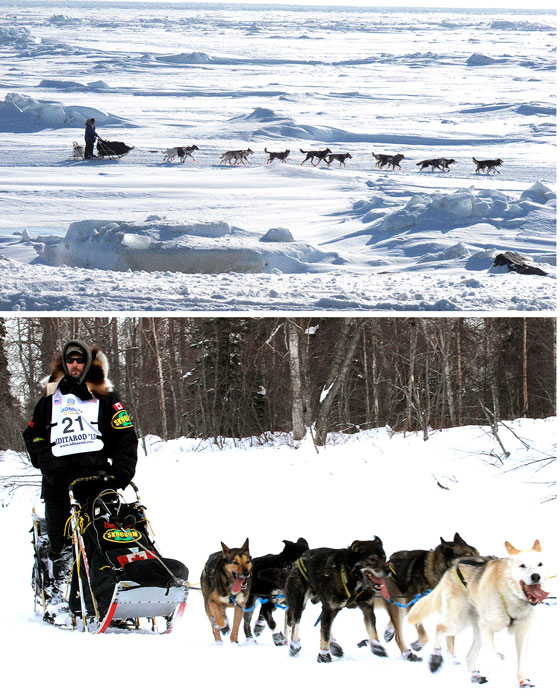
The two Yukon mushers returned home from the 2013 Iditarod Trail Sled Dog Race this week with different stories of disappointment.
Phillips was the first Canadian to finish last Wednesday, placing 24th and collecting $6,500. The Tagish musher entered Nome with 13 dogs.
Willomitzer, meanwhile, was forced to withdraw near the halfway mark of the race after one of his dogs slipped its collar and was lost for nearly three days.
Both were aiming to finish in the top 10.
Mitch Seavey, 53, became the oldest-ever winner of the 1,600-km Iditarod last Tuesday, winning $50,400 and a 2013 Dodge Ram pick-up truck.
"It was a pretty challenging race for me, I think one of my tougher Iditarods,鈥� Phillips told the Star this morning. "The weather was a huge factor. It was so warm. I think one day was plus-10. The trails were super slow.鈥�
The 44-year-old admitted a couple of "poor choices鈥� to take long rests put her out of the hunt late in the race.
Phillips said she lost four hours on the top mushers in Takotna, and lost another two further down the trail.
"Right off the bat, I can see where I lost six hours, and that wasn't very smart on my part,鈥� she admitted. "If you lose time on those top guys, it's pretty hard to make it back up.鈥�
Once she realized she was no longer able to make a big move to vault herself to the front of the pack, Phillips decided to play it smart and rest her team well.
"The Iditarod is so strategic, you have to go in with a few different plans,鈥� Phillips said. "I was just going to wing it, and that didn't really work for me. I'll take that from this race and do a couple of things different in training. I found I trained my team a little too slow.鈥�
Still, she only finished five spots back of four-time champion Lance Mackey and four back of Ramey Smyth, the runner-up in 2011.
Phillips said she was proud of that achievement, as well as finishing as the top Canadian with a large team of healthy, happy dogs.
"It was disappointing for myself because I'm a high achiever and I definitely wanted to finish higher,鈥� she said. "But when I look at the people in front of me, they're no slouches. It was just an extremely competitive Iditarod, and I'm more determined than ever.鈥�
Phillips said that taking home a smaller monetary prize hurts.
"It's always a challenge, but it just means you have to work harder to come back,鈥� she said.
Willomitzer's tale from the trail is an interesting one.
Montego, one of former Yukon Quest champion Hans Gatt's prized lead dogs, ran off after the Whitehorse musher found himself on a dead-end detour.
The trail between Iditarod and Shageluk was "rough and windy,鈥� tough for even the trailbreakers who were ahead of the sled dog teams. At some points, snowmobiles that had slid off the trail created slight detours for mushers.
In the early morning of March 8, Willomitzer found himself on one of these detours that became a dead-end. The musher was forced to turn around his dog sled team in the dark, which saw him loosen the tug line and reassemble his team one by one.
It was then that Montego slipped her collar and ran back down the trail the first time.
However, after coming upon Alaskan musher Jeff King's team coming down the same side trail Willomitzer was trapped in, Montego actually returned to her team and was able to be collared again.
Willomitzer sorted out his team, then helped King with his team. Back on the main trail, with his team working through deep snow, Montego pulled out of her collar again, racing off back the way the team had come. This time, she wouldn't return.
Willomitzer spent the next few days trying to track down his lost dog, turning around his team before finding tracks heading into the bush. The 43-year-old snowshoed after his dog, and even hired a small-engine plane to try and track the dog's whereabouts from the skies.
"I figure the dog just hunkered down eventually after running off its adrenaline, and started sleeping underneath a tree,鈥� he suggested. "It was above freezing temperatures.鈥�
Montego was eventually found by a trapper on a snowmobile, and dropped off at the Iditarod checkpoint Sunday afternoon.
Later that night, Willomitzer was withdrawn from the race.
"I just couldn't continue within the framework of Iditarod rules because I didn't have all my dogs with me,鈥� he said. "That was the only dog I ever raced that I didn't own. I borrowed the dog because it was one of Hans' good leaders.
"Everything was going good,鈥� Willomitzer said of his race prior to losing Montego. "I was 15 minutes off of my race plan. I was right where I wanted to be with 15 dogs firing on all cylinders. I was just winding the team up like you wind up an alarm clock. The plan was to roll into the top 20 in the second half of the race and see how many guys we could pick off.鈥�
If not for the lost dog, Willomitzer said he was primed for a good finish. His dogs performed consistently throughout the first half of the race, and were raring to hit the flat trail provided by the Yukon River.
"I still don't understand why the dog in the end blew a fuse,鈥� he said. "It was a huge disappointment. If you don't have that dog back within two or three hours, your race is out the window. You're not making up that time. I don't know if I would have been top 10 or not, but I sure would have liked to find out.鈥�
This year's race marks the third consecutive Iditarod that Willomitzer has been unable to finish. He scratched from the race in 2011 and 2012.
"It costs a lot of money to run these races,鈥� Willomitzer said. "It's not about getting rich and not winning in the lottery, it's about not being able to recover the money that I've spent.鈥�
Willomitzer and Phillips won't be off the trail long. Both mushers plan to take part in the Percy DeWolfe Memorial Mail Race beginning March 28 in Dawson City.
Be the first to comment