Photo by Photo Submitted
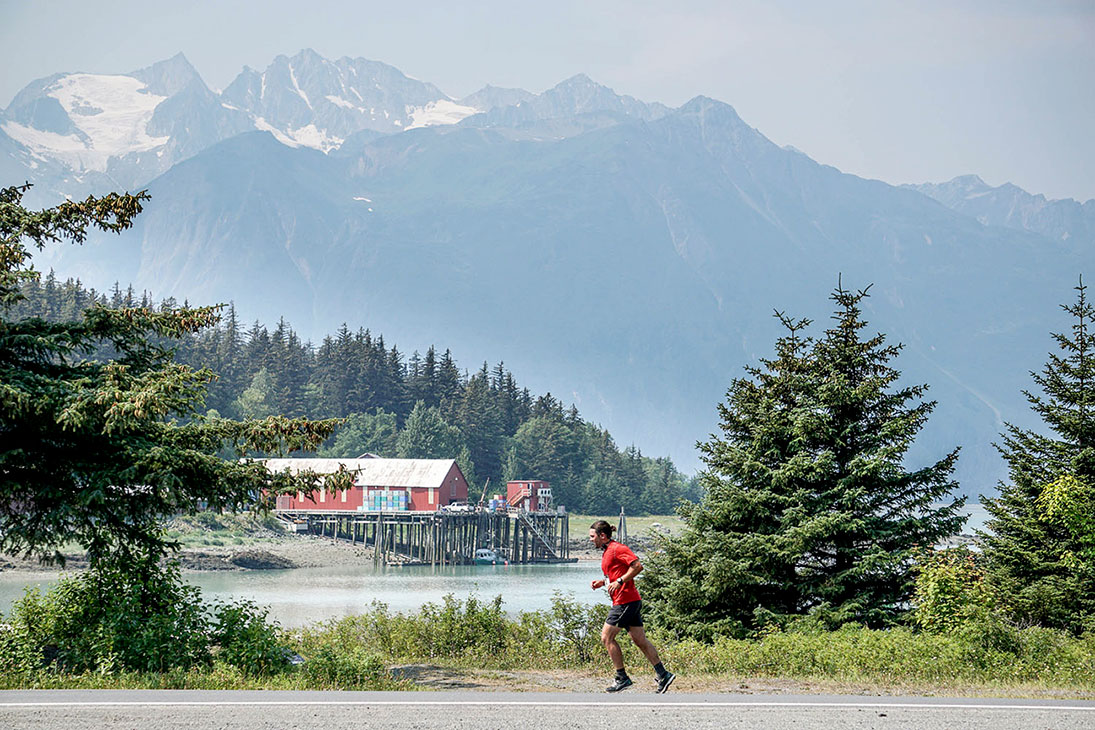
CHILKAT CHUGGIN’ – A runner participates in the July, 2019 Chilkat Challenge Triathlon near Haines, Alaska. The race is back for its fourth edition after a four-year absence. Photo courtesy RUSS WHITE
Photo by Photo Submitted
CHILKAT CHUGGIN’ – A runner participates in the July, 2019 Chilkat Challenge Triathlon near Haines, Alaska. The race is back for its fourth edition after a four-year absence. Photo courtesy RUSS WHITE
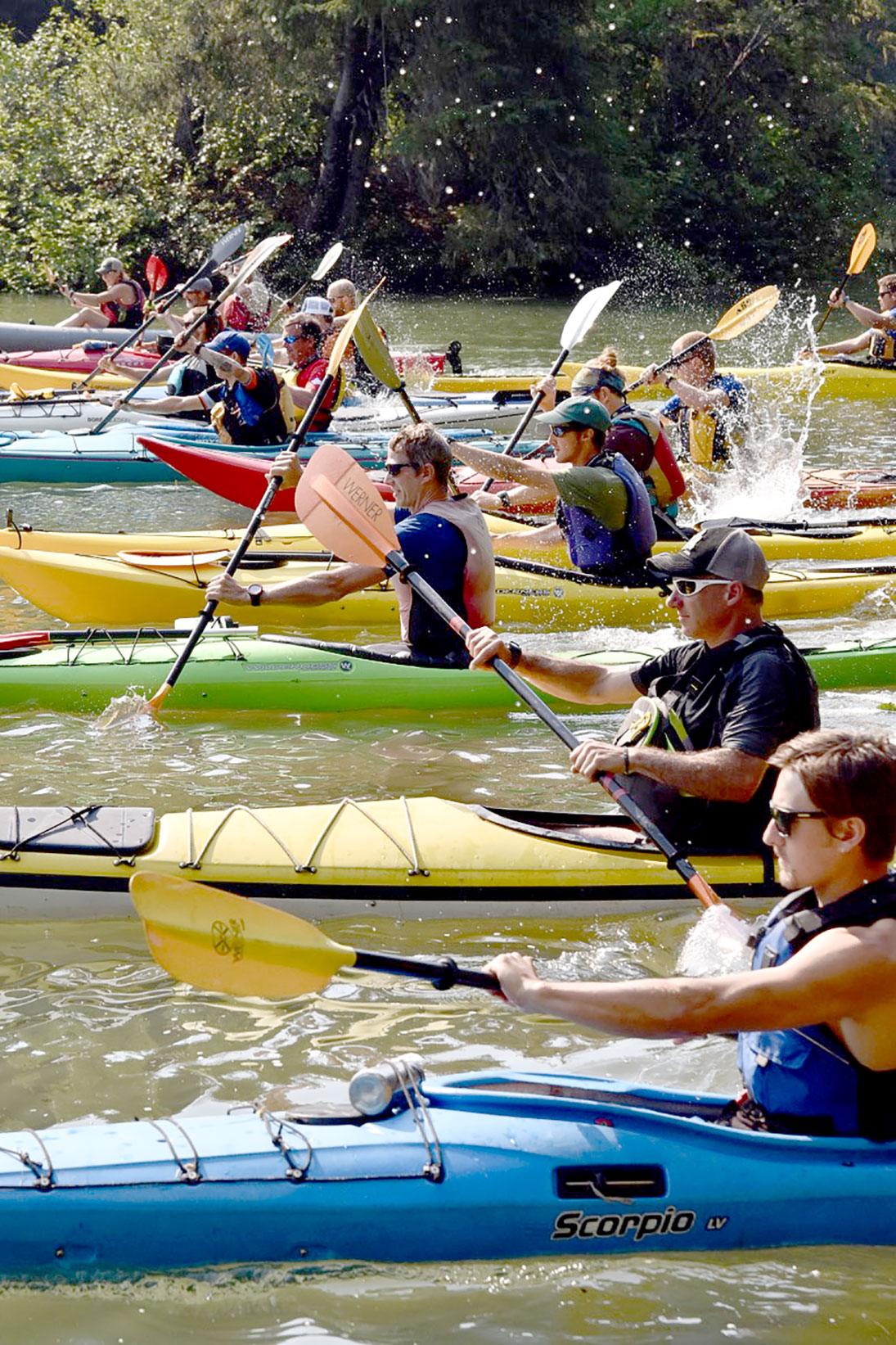
Photo by Photo Submitted
POWERFUL PADDLING – Paddlers start their journey in the 2019 race. Photo courtesy SKYE POSEY
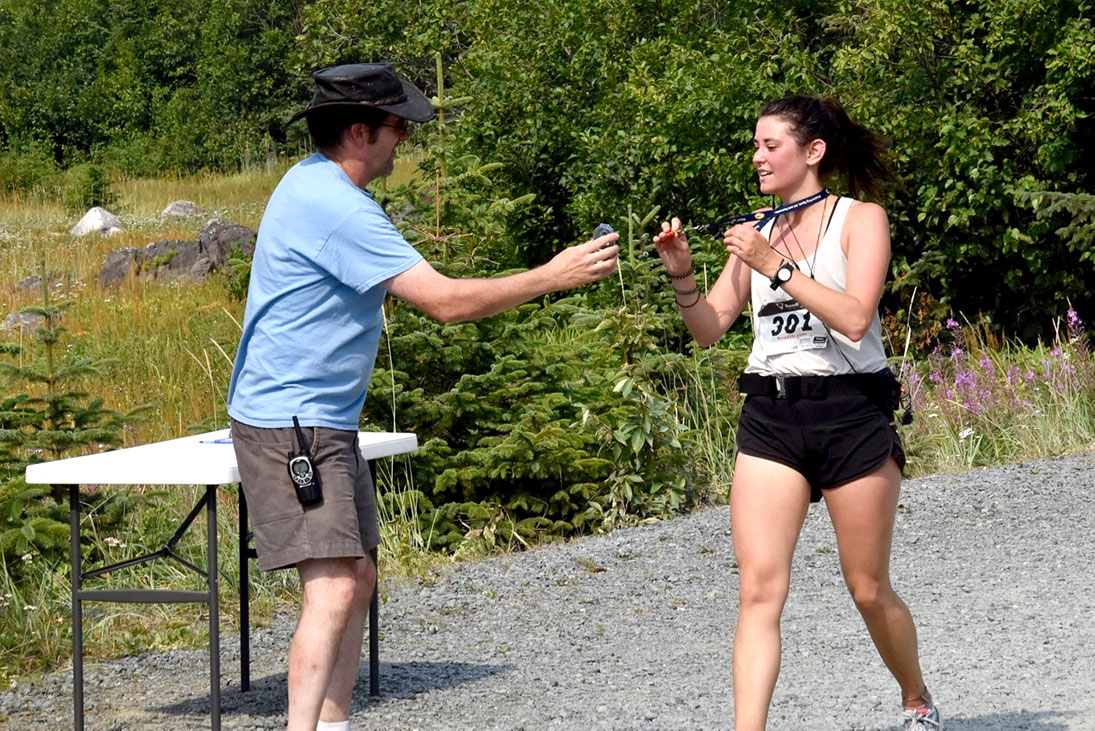
Photo by Photo Submitted
TIME CHECK – A runner gets her timing chip ready to record her time at a time station during the 2019 race. Photo courtesy SKYE POSEY
Registrations are open for the Chilkat Challenge Triathlon.
Registrations are open for the Chilkat Challenge Triathlon.
The race, also known as the CCT, takes place in Haines, Alaska, on and near the Chilkat River, on July 2.
The race divisions are Solo Man, Solo Woman, Two-Person Team and Three-Person Team.
“We’re very excited to put on the race again,” said race organizer Gershon Cohen. “We took a few years off because of the pandemic. Obviously, the border was closed and usually about half the participants are from the Whitehorse area, so folks couldn’t get here. We’re very happy to be able to put on the race again in 2023.”
Cohen explained this year’s route.
“The paddle portion is the same as it has been in previous years starting in Mosquito Lake and going through the slough and out into the Chilkat River. It’s about an eight mile paddle to get to a place on the Haines highway. There’s a pull out where the river is next to the highway. Folks will get out and get on their bikes and ride 21 miles to town. And there they will get off their bikes.”
Cohen said the run is different this year. It’s shorter than in the past, 10 km or about 6.5 miles. Racers will run out to the Mount Riley trailhead and back. The running portion and the entire race will end at the parade grounds in Fort Seward.
“The race is about having fun and having an athletic event,” said Cohen. “But it’s about celebrating the river. And what role the river plays. It’s just been such a vital part. It’s such a beautiful part of this community in this area.”
Cohen explained how the race originated.
“I originally conceived of a race that was just on the river and there was going to be basically a kayak race which I thought would have been a world class kayak race down the Chilkat River all the way to Chilkat State Park. So it would have been about a 40-mile, 45-mile kayak race. And I was talking to a few folks about it, who are very experienced water folks. They run training for whitewater rescue and all that. And you know, that could actually be, number one, kind of dangerous in some places and number two, depending on the wind, you might not get there. Because once the river empties out near town and really gets very broad, if the wind is coming against you, you might have trouble going that last six and a half miles down to the park. And so I was cautioned against doing that race.
“Then I talked to a few friends and we thought ‘well, we definitely want some part of the race be on the river. Let’s have the rest of the race be next to the river.’ And then out of that came the idea again of actually turning it into a triathlon with a biking portion and a running portion. Of course most triathlons are swimming rather than boating but that’s just one of the special things about this race.”
Cohen added this year, they’re hoping to get some stand up paddle boards.
“We’ve never had that before … kayak is going to be the fastest but we had some people turn in some remarkably fast times in canoes … you can try anything you want on the river that doesn’t have a motor.
“I’d love to see some paddle boards going down the Chilkat, that would be sensational just to watch.”
Of course, safety is a big factor in the race.
“We’re very, very concerned about the safety of all participants, especially along the river portion,” said Cohen. “We have volunteers who are stationed within eyesight of each other all along the way with walkie talkies. And so as each person goes by a station, their number gets recorded off their bib. And then if, for some reason, that number isn’t recorded at the next station, we know where somebody might have had to go ashore and (we) go look for folks. We want to make sure that everybody has a good time, everybody gets to that awards banquet and has had a lot of fun.”
Cohen said they have two jet boats on the water, one of which has one of the local physicians on board.
“We have these two jet boats cruising up and down and just making sure they’re in contact – they’ve got walkie talkies, and they’re in contact with the folks on land. The whole water portion of the race is over within an hour. But for that hour, everybody is very focused. We have spotters along the shore and we make sure that everybody’s doing OK.”
Cohen added that they had 45 volunteers for the last race in 2019.
He said that about 65 to 67 people raced in 2019. This year, they’ve capped the number at 100 for logistical purposes.
“There’s no deadline until within days of the race. It’s a little bit less expensive to register now,” related Cohen.
The registration fee is US 125$ for a single person. It decreases proportionately for teams of two and three. A three person team is US 320$.
“You can compete as an individual and do the whole thing or you can have two people share it where one person does two legs and the other person does one leg, or you can do a team of three, where each person does one portion,” explained Cohen.
Minors over 15 are allowed with the permission of a parent or guardian and must sign a waiver.
A mandatory orientation takes place the night before the race.
“It’s primarily for the water portion,” said Cohen. “While we don’t require prior race experience, we do require that everyone participates in the pre-meeting the night before.”
“We have prize categories for individual races,” said Cohen. “Men’s and Women’s – first, second and third place, and we have prizes for teams. Teams are combined in terms of two or three into first, second, third place for the team entries.
“Great prizes. Some of the gear companies, they love the idea, they were enchanted with the location. Patagonia, REI, Alaska Nugget Outfitters. The prizes, frankly, for a race of this size are kind of off the charts. Patagonia prizes just showed up a couple weeks ago and they gave us $1,000 worth of gear to give away. You know, puff jackets and duffel bags and really, really generous prizes.
“We’ve had people who won the race in the past and when they got their prizes, they’re looking like, ‘You gotta be kidding me. This is what I got for winning?’”
Every participant receives a free catered dinner, a free beer from the local brewery and a commemorative t-shirt.
Needless to say, Cohen is pleased that the race is going ahead after a four-year hiatus.
“We’re really happy about it. It’s just a fun event. It’s great, not just for us, but for promoting the beauty of the area and it’s good for the community at large. It brings a lot of people to town. Not just the racers; the racers have family and friends who come.
“It’s a Canadian holiday as well. So a lot of folks from the Yukon are down here. And that’s a good thing for Haines. It brings people into the restaurants and stores and I think it’s great.”
Cohen added that it’s really nice that Haines and Whitehorse share so much, including the CCT.
“It’s just a way for us to interact in a really positive, fun way.”
Those interested in the CCT or wishing to register can go to
– With files from Diego Brisebois-Bourget.
In order to encourage thoughtful and responsible discussion, website comments will not be visible until a moderator approves them. Please add comments judiciously and refrain from maligning any individual or institution. Read about our user comment and privacy policies.
Your name and email address are required before your comment is posted. Otherwise, your comment will not be posted.
Be the first to comment